

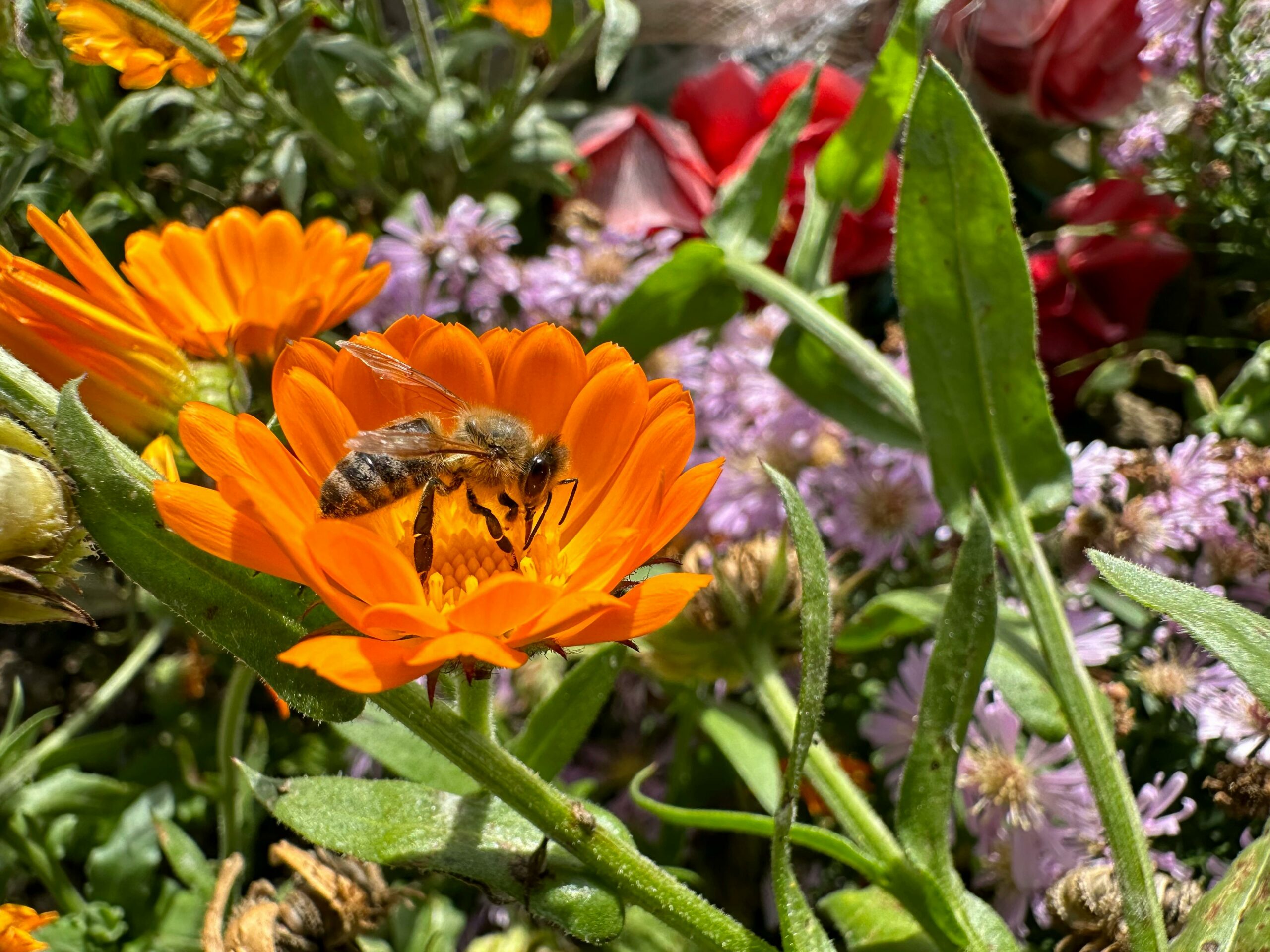
Why we want bees to move into our plot of land
Ever since my family and I decided to live closer to nature, we have dreamed of making our plot teeming with life. Mason bees are not only fascinating creatures, but also key pollinators. Having them around will increase biodiversity and contribute to the health of our local ecosystem.
Why mason bees are needed
Mason bees act as ecological gardeners. Their work is invaluable in the pollination process, which translates into better yields in orchards and gardens. They are extremely efficient and, unlike honey bees, are not aggressive, making them ideal neighbors for our family oasis.
Mason bees
Mason bees are a group of solitary bees. The most common one here, the red mason bee (Osmia bicornis), is densely haired and rusty brown rather than metallic – the metallic blue-green sheen belongs to other species in the genus, such as the blue mason bee (Osmia caerulescens). Species differ in size and colouring. They live all over Poland, often close to buildings, where they find suitable places to nest.
Raising mason bees and how to get started
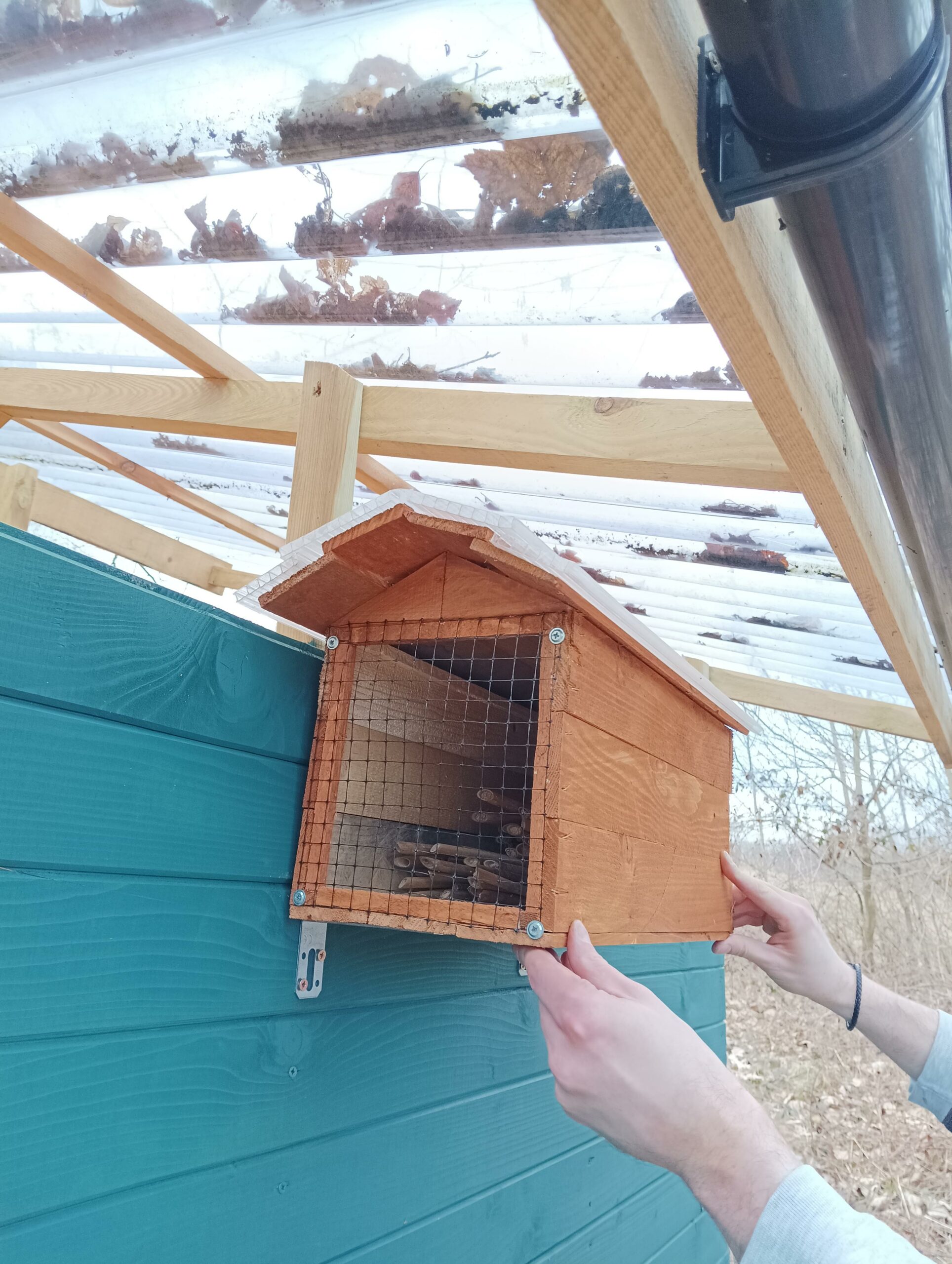
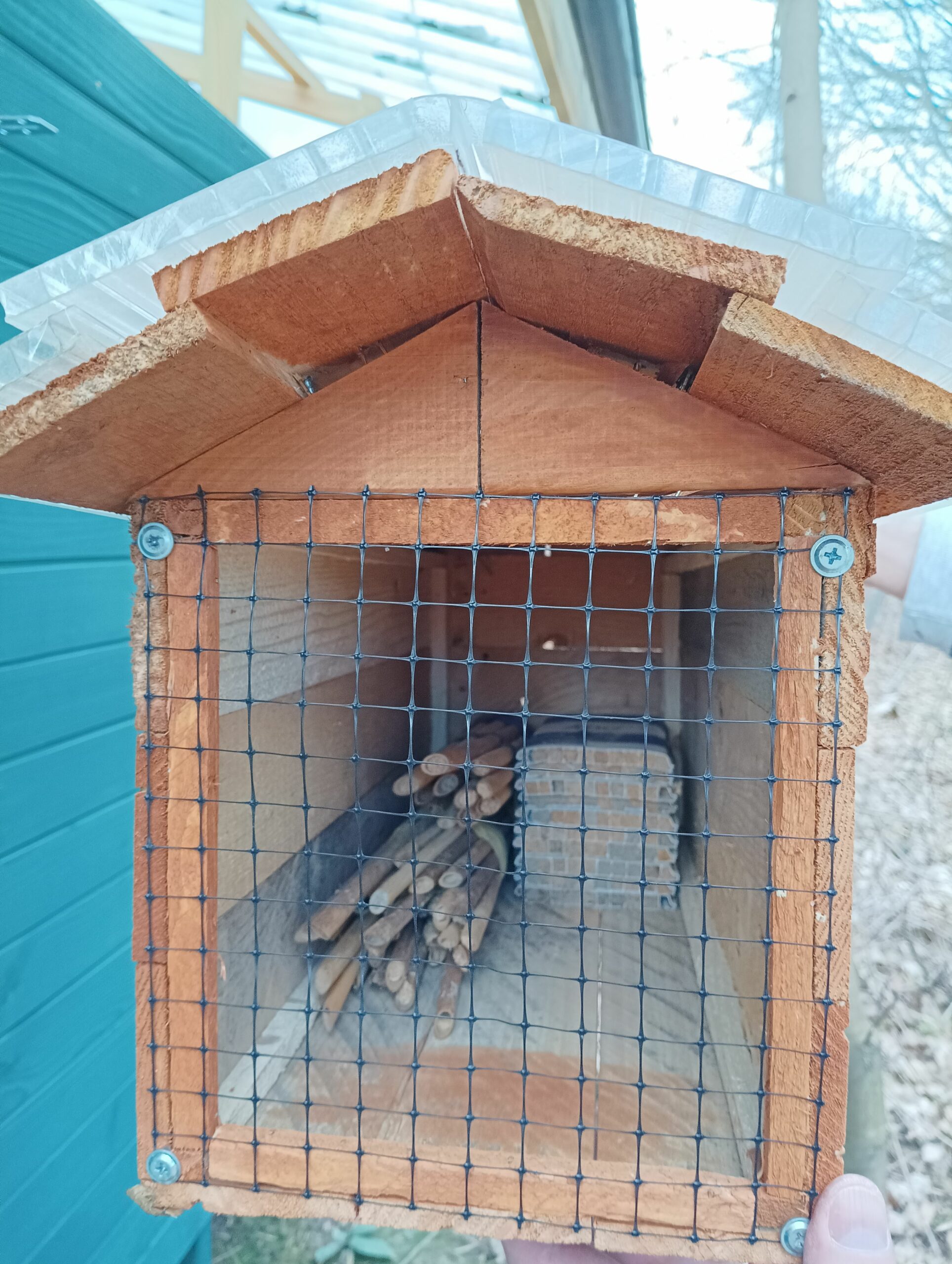
Starting to breed mason bees is simpler than it seems. All you need to do is create the right conditions for them – that is, a house with nests, which can be made of wooden blocks with holes or bamboo tubes. It is important to place the house in a sunny place and ensure proximity to flowers.
How they reproduce and what kind of nests they have
Mason bees breed in spring, when the female looks for a place to nest. Most often these are cavities in wood. She stocks each cell of the nest with a ball of pollen and nectar, lays an egg on it and then seals the cell with a partition of clay or mud – and that masonry is exactly where their name comes from. Leaf pieces are used by leafcutter bees (Megachile), a different group of solitary bees, so you will not see them in a mason bee nest. Watching this instinctive process is fascinating, and it comes with the knowledge that we are supporting the local population of these beneficial insects.
A neighbor gave us a house with bee nests
Our neighbor, a nature enthusiast and long-time friend of mason bees, recently donated us a wooden house – a small hotel for these beneficial insects. This house has a number of openings that are ideal for female mason bees looking for a place to nest. Placing it on our plot is a step towards creating a friendly environment for local pollinators, and we are looking forward to seeing the first ‘tenants’.
What plants are worth growing in the garden for mason bees
The red mason bee flies in early spring, roughly from March to June, so what matters most are plants that bloom in that window: willows, fruit trees, currants, crocuses, dandelions and lungwort. Lavender, rosemary and heather bloom later and will not help mason bees, but they are still worth having for the pollinators that come after – together they keep something in flower all season. Planting them supports biodiversity and helps maintain a healthy ecosystem.
Our Plot Step by Step – The Whole Series
- Buying a plot with no power, water or access road
- Levelling the land with an excavator
- Our first cabin made of OSB boards
- A house for mason bees (this post)
- A treehouse for the kids
- A wind turbine for an off-grid plot – which one to choose
Mason Bees – FAQ
Do mason bees sting?
Unlike honeybees, mason bees are not aggressive – which makes them good neighbours, even for families with children.
Where should you hang a mason bee house?
In a sunny spot close to flowering plants. The nests can be made of wooden blocks with drilled holes or bamboo tubes.
When are mason bees active?
The red mason bee flies in early spring, roughly from March to June.
Which plants attract mason bees?
Those flowering in early spring: willows, fruit trees, currants, crocuses, dandelions and lungwort.
What does the red mason bee look like?
The red mason bee (Osmia bicornis) is densely hairy and reddish-brown. The metallic blue-green sheen belongs to a different species – the blue mason bee (Osmia caerulescens).
Why are they called mason bees?
Because they seal each nest cell with a wall of clay or mud – they “build” it like masons.