

If you usually associate May weekend trips with fighting for a parking spot and pushing through crowds, Hortulus Spectabilis on a gray, drizzly day will be a pleasant surprise. We visited off-season, and the weather wasn’t great (it rained a bit), but because of that, we had this massive place practically all to ourselves.
Getting There, Parking, and a Crucial Distinction
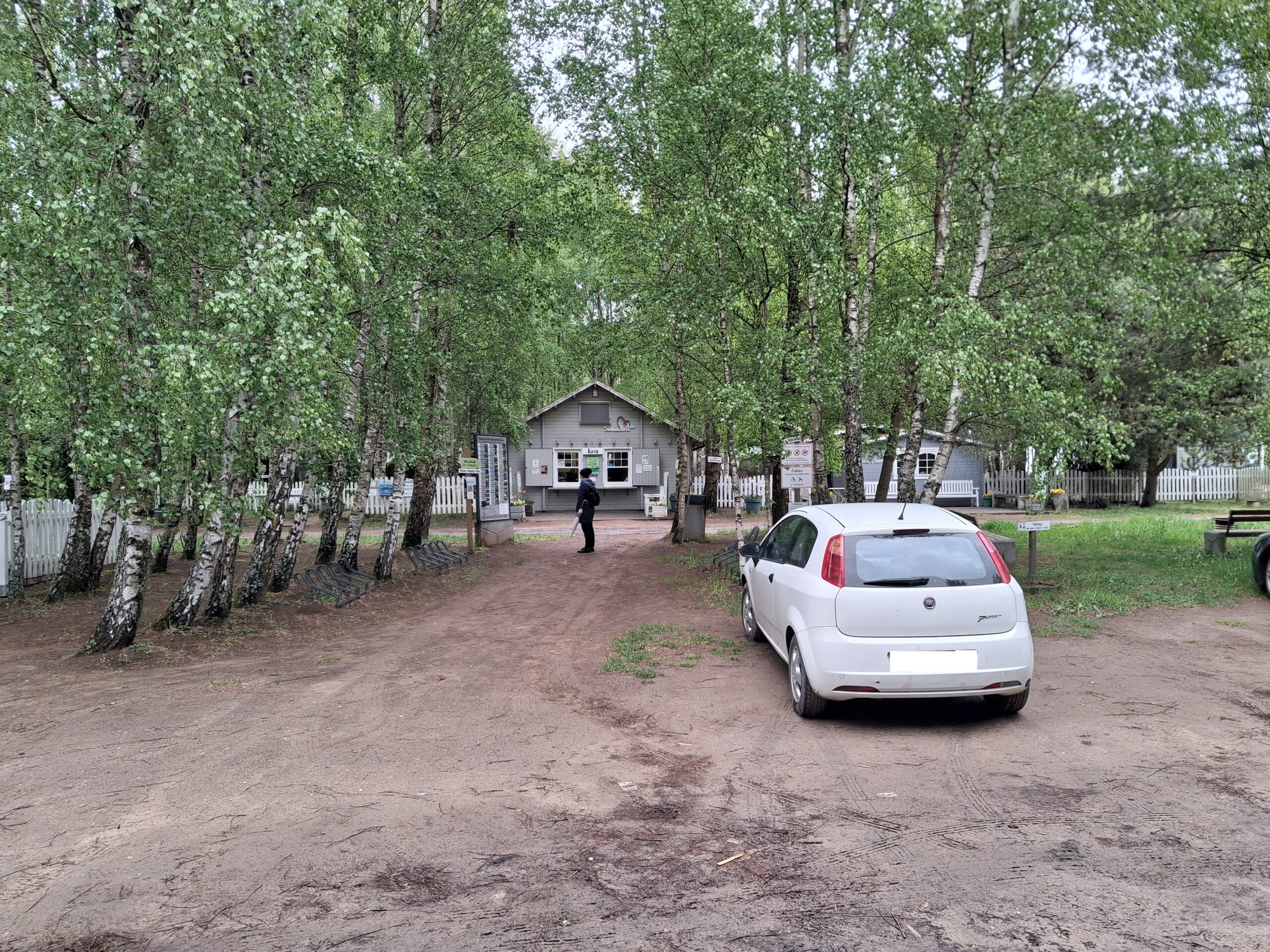
Getting there is a breeze – there are clear signposts along the way, so it’s pretty hard to get lost. The gardens are located about 8.5 km in a straight line from the seaside (near the towns of Koszalin and Kołobrzeg). When we arrived, we found a huge but completely empty parking lot. Since there were no other cars, we parked right in front of the main entrance.
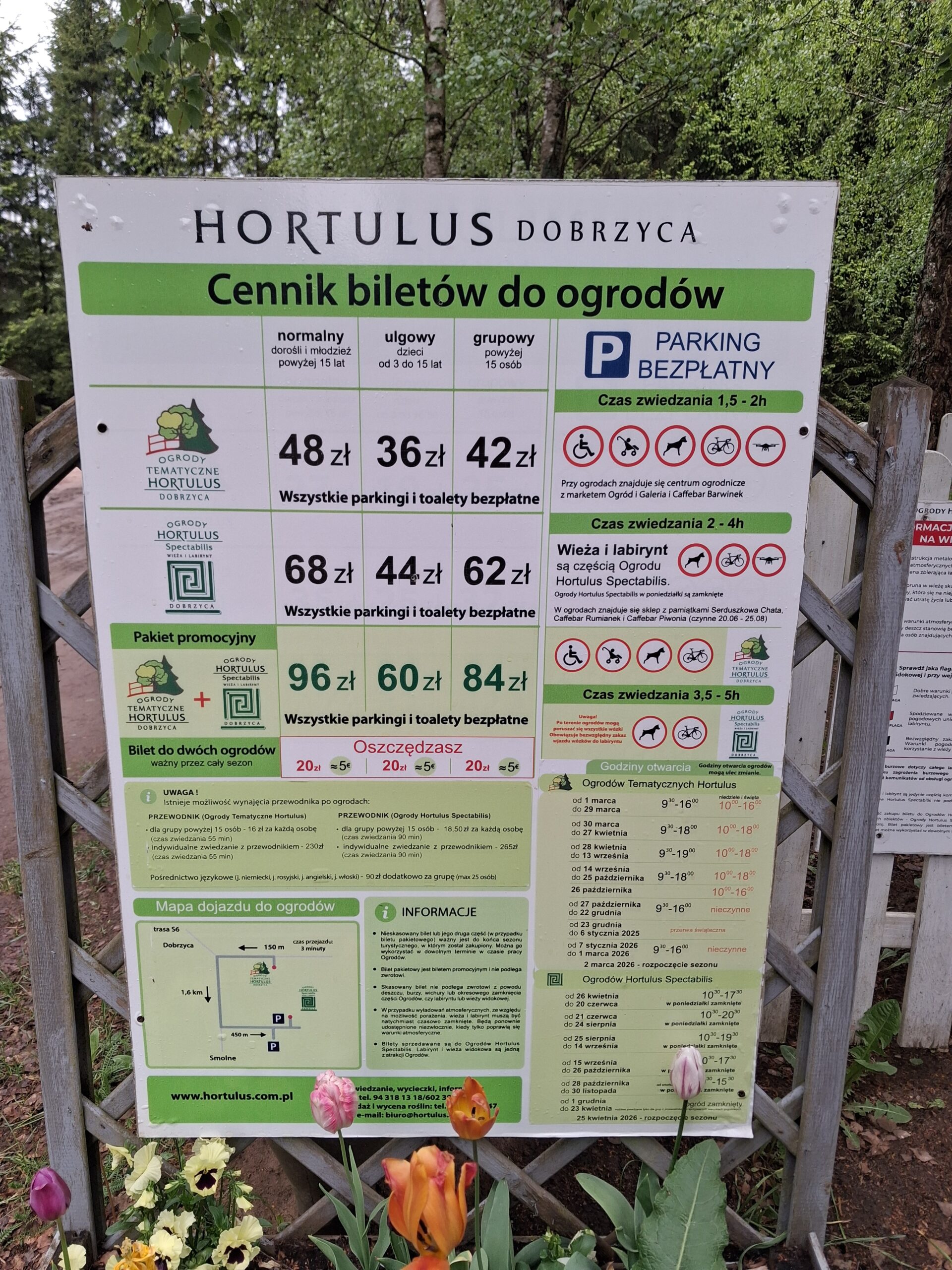
An important logistical warning to start with: Don’t mix up the locations! Dobrzyca actually features two separate garden complexes about 2 km apart – the older Hortulus Thematic Gardens (Ogrody Tematyczne) and the newer Hortulus Spectabilis Gardens (the ones with the large tower and the giant hornbeam maze that I’m writing about). They require separate admission tickets, though you can buy a combined ticket at the counter.
The lady at the ticket office was incredibly nice. She quickly explained the options and recommended an additional field game for the kids for 14 PLN. It’s definitely worth getting – there are special punches (stamp stations) hidden throughout the main maze where kids need to punch their game cards. It’s a great motivator to keep them walking.
The Heart of the Gardens: The Hornbeam Maze by the Numbers
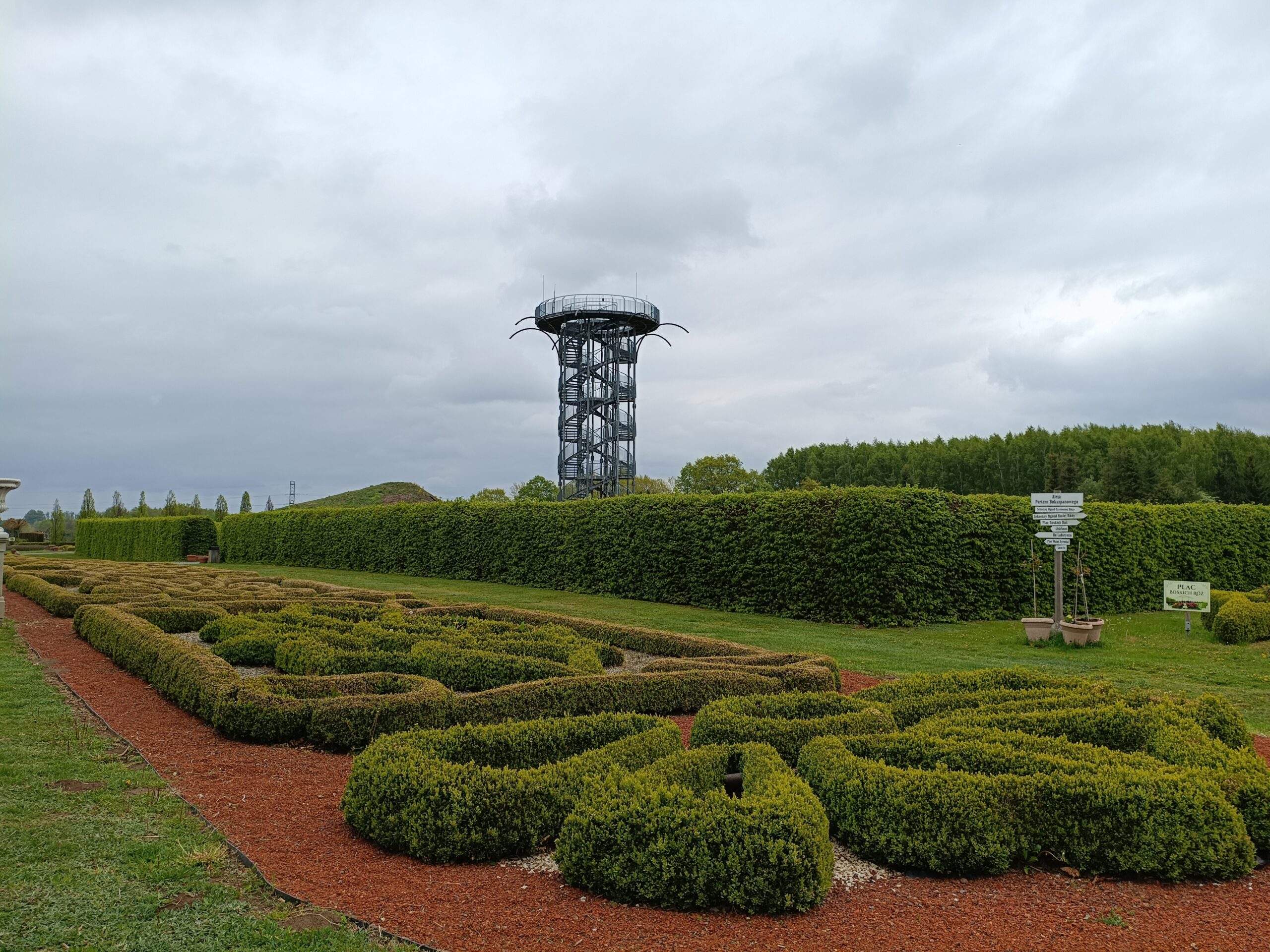
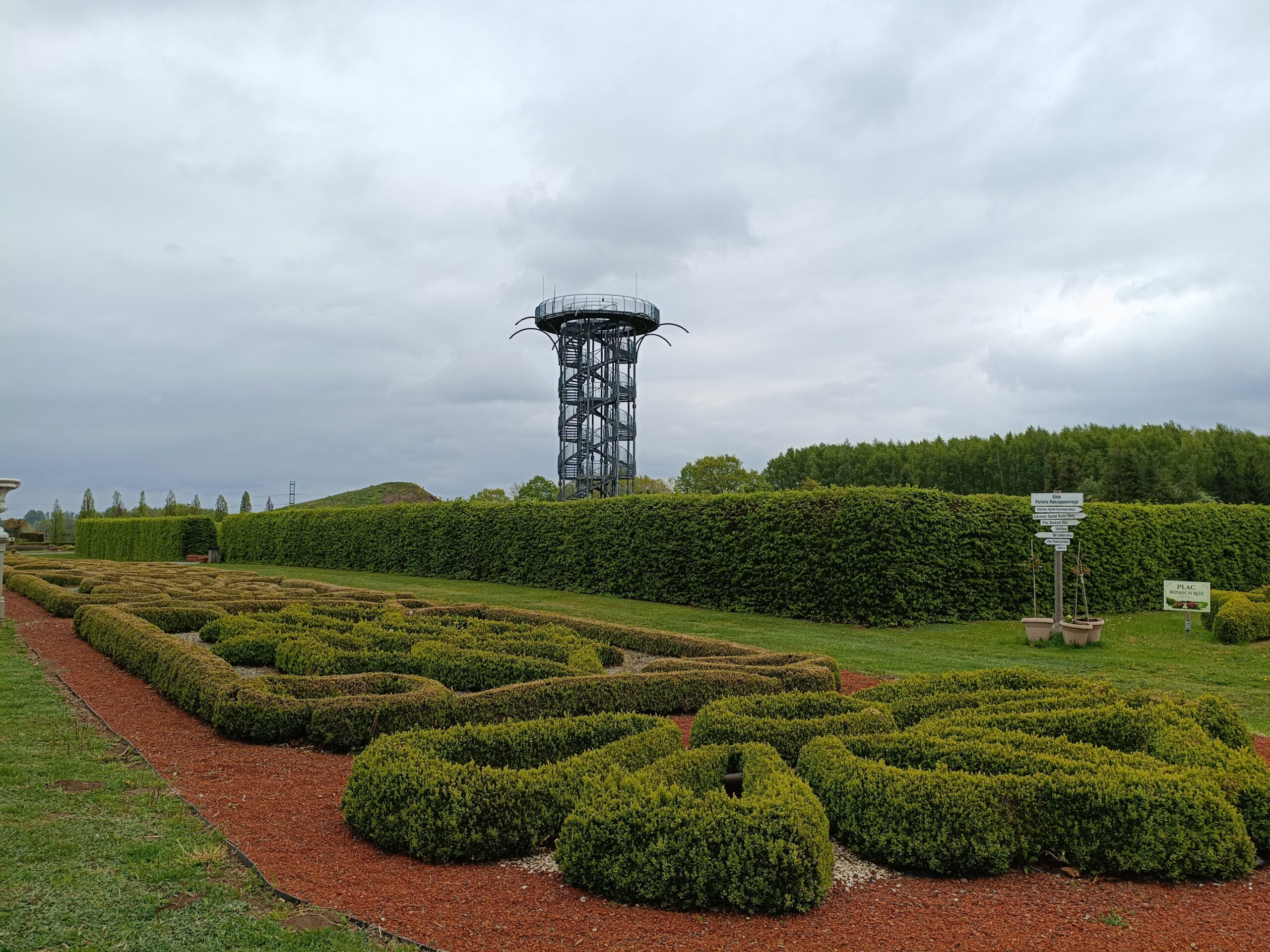
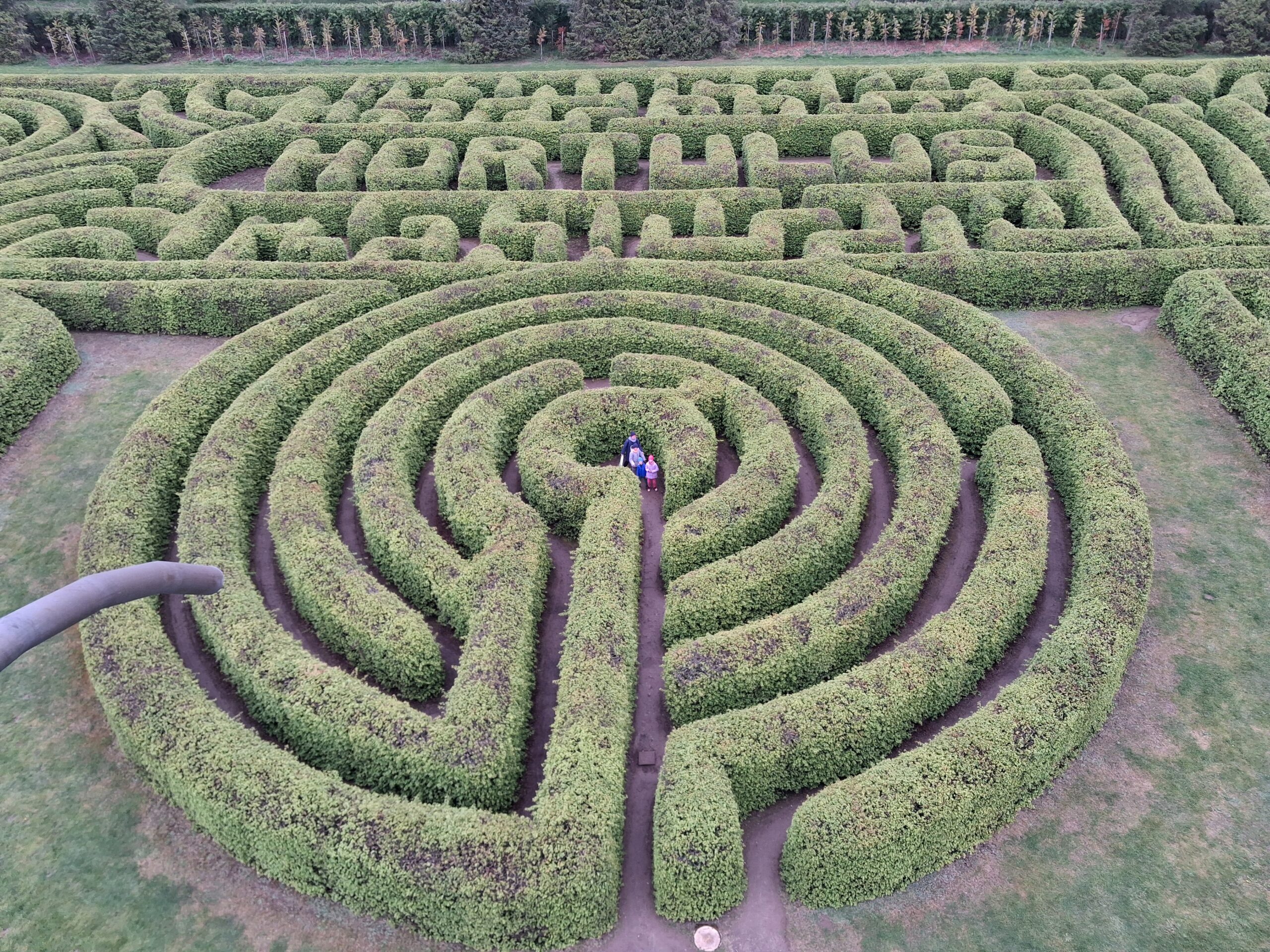
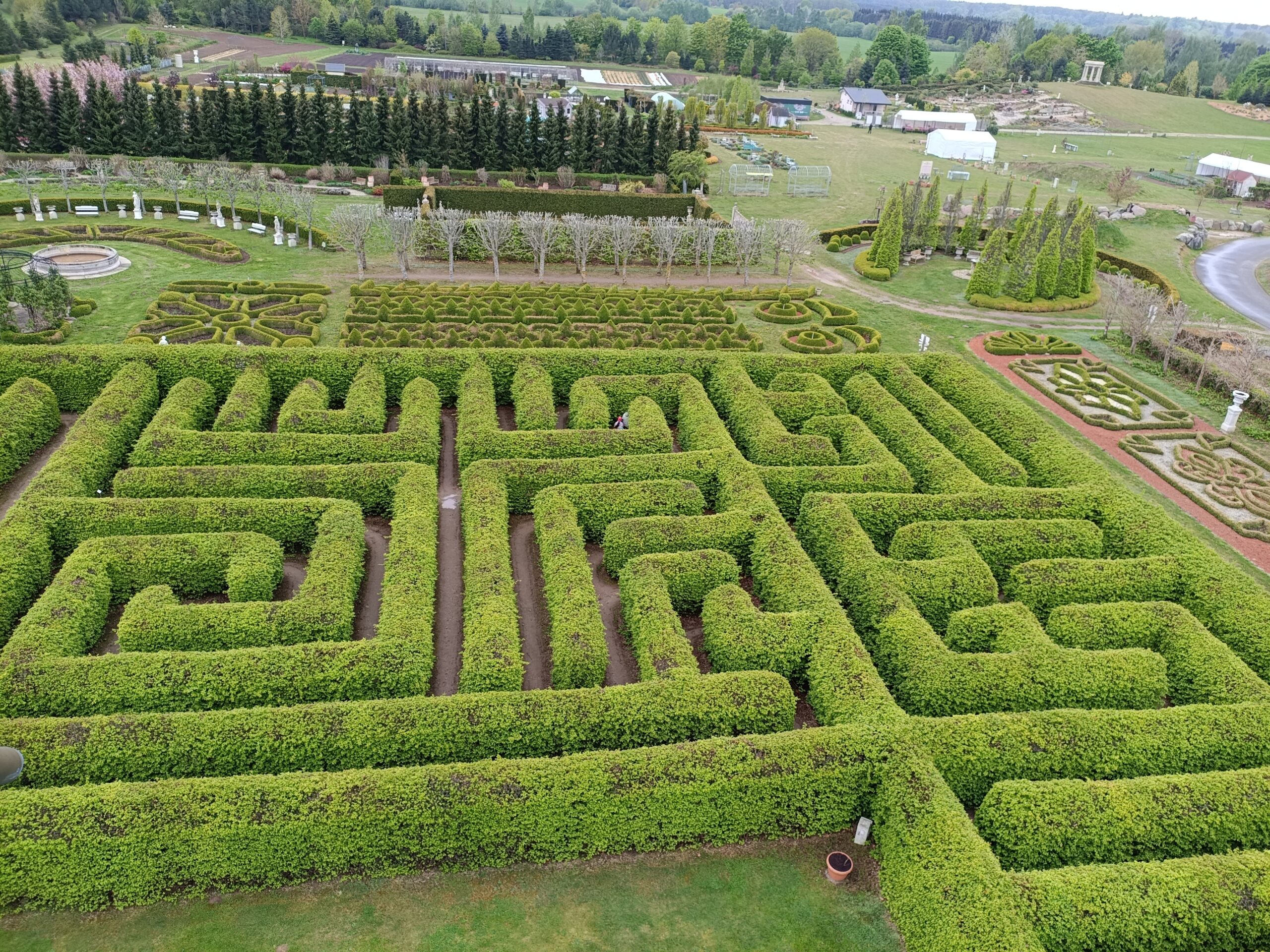
We headed straight for the main attraction – the hornbeam maze. The kids got a map and their game cards and immediately dashed off to find the stamp stations. My wife and I climbed the metal observation tower, which is shaped like a double DNA helix and stands 20 meters high, to get a view from above. The view is absolutely worth it – you can see the entire geometry of the layout, and you can hear the kids laughing below, occasionally spotting their colorful beanies moving through the paths.
The older kids spent the entire day in the maze, so they didn’t even manage to see the rest of the gardens. Our youngest, however, was a trooper and walked the whole remaining distance with us. For smaller kids, there is also a small playground at the end.
We picked up some fascinating facts about the project from the information boards on site:
- History: The first plantings for the maze started in April 2003. The project was designed over the winter by Piotr Bigoński, and the planting was done by… just three pairs of people. The complex opened to the public in 2014.
- Scale: The entire maze covers exactly 1 hectare (101.5 x 100 m). It took 15 years of systematic fertilizing and trimming for the hornbeam walls to reach their full density and a height of over 2 meters.
- Maintenance: The total length of the hedge walls is a staggering 6,539 meters. The hedge is trimmed three times a year by a team of 12 people. It takes them a week, and the trimming surface is equivalent to 17 football fields. The gardener with the trimmer covers about 16.5 km on foot during this time (the distance from Gdyni to Gdańsk).
There are three paths leading to the central square with the tower: the shortest (396 m), the medium (924 m), and the longest (1,003 m). If you get completely lost inside, the classic “right-hand rule” works perfectly. It will get you to the goal, but it will take you along the longest route (over a kilometer of walking).
What Else is There? (If You Have Time)
The property is massive – currently, over 7.5 hectares are open to the public, and eventually, the whole complex is supposed to cover 30 hectares. You can easily plan to spend a whole day here. We visited before the peak season, so the vegetation was just starting to wake up and the colors weren’t at 100% yet, but the space is still very impressive. Besides the maze, you will find:
- The Gardens of Magic, Energy, Time, and Space (including a stone circle, a dolmen, and a Celtic calendar),
- Rose gardens (four different rosaries, including the Square of Divine Roses) and boxwood parterres arranged in intricate embroidery-like patterns, which look great from the tower,
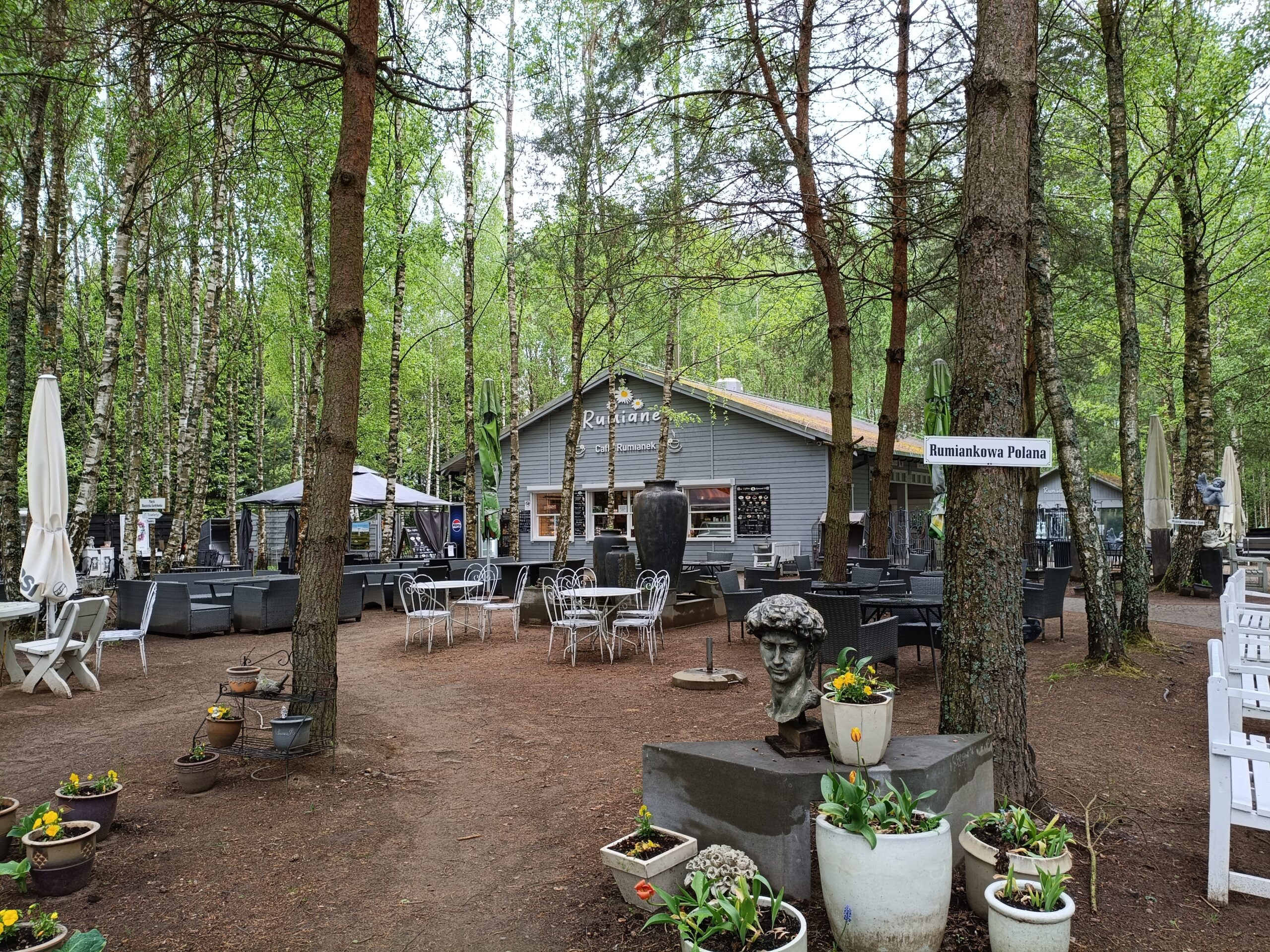
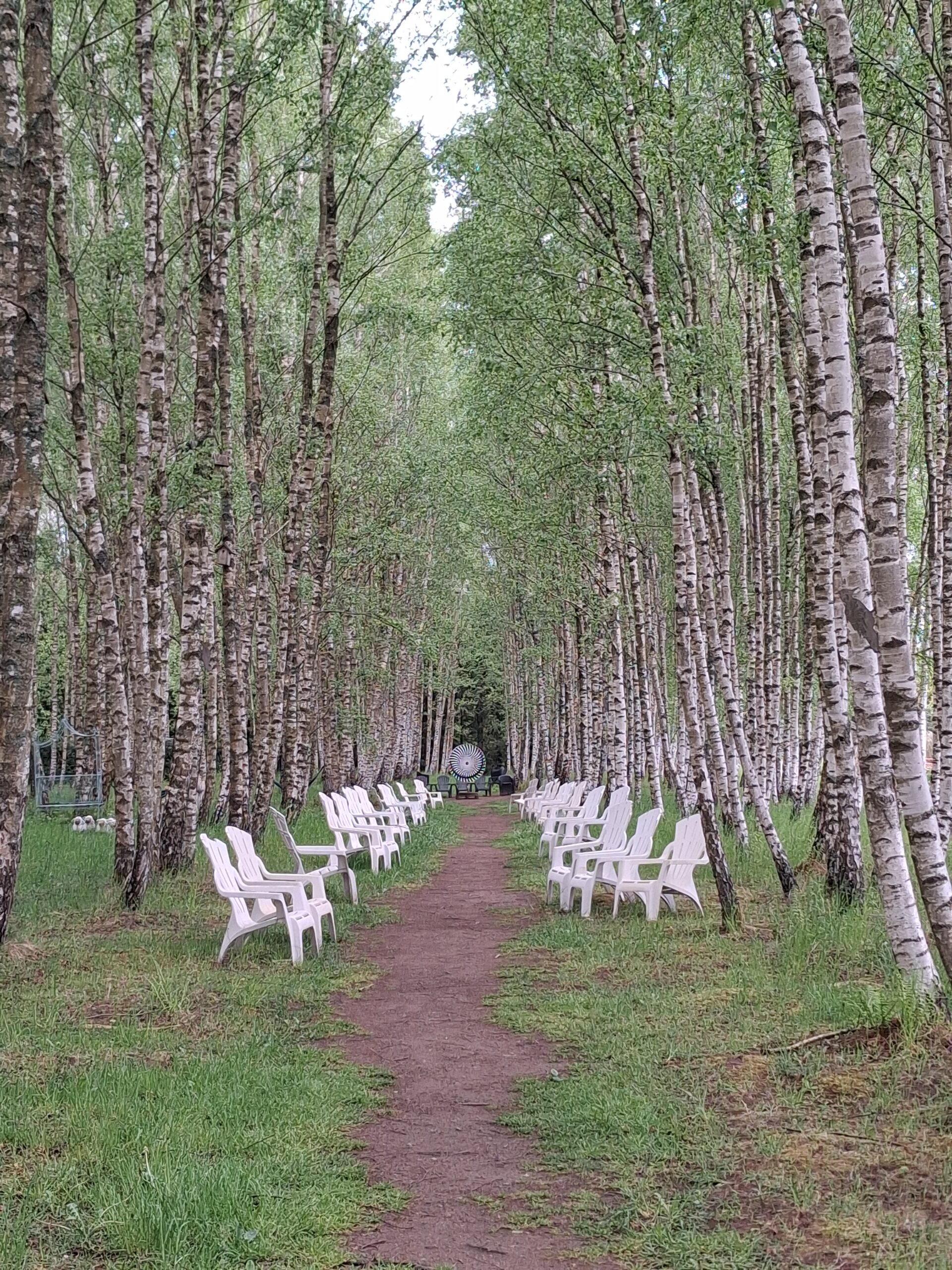
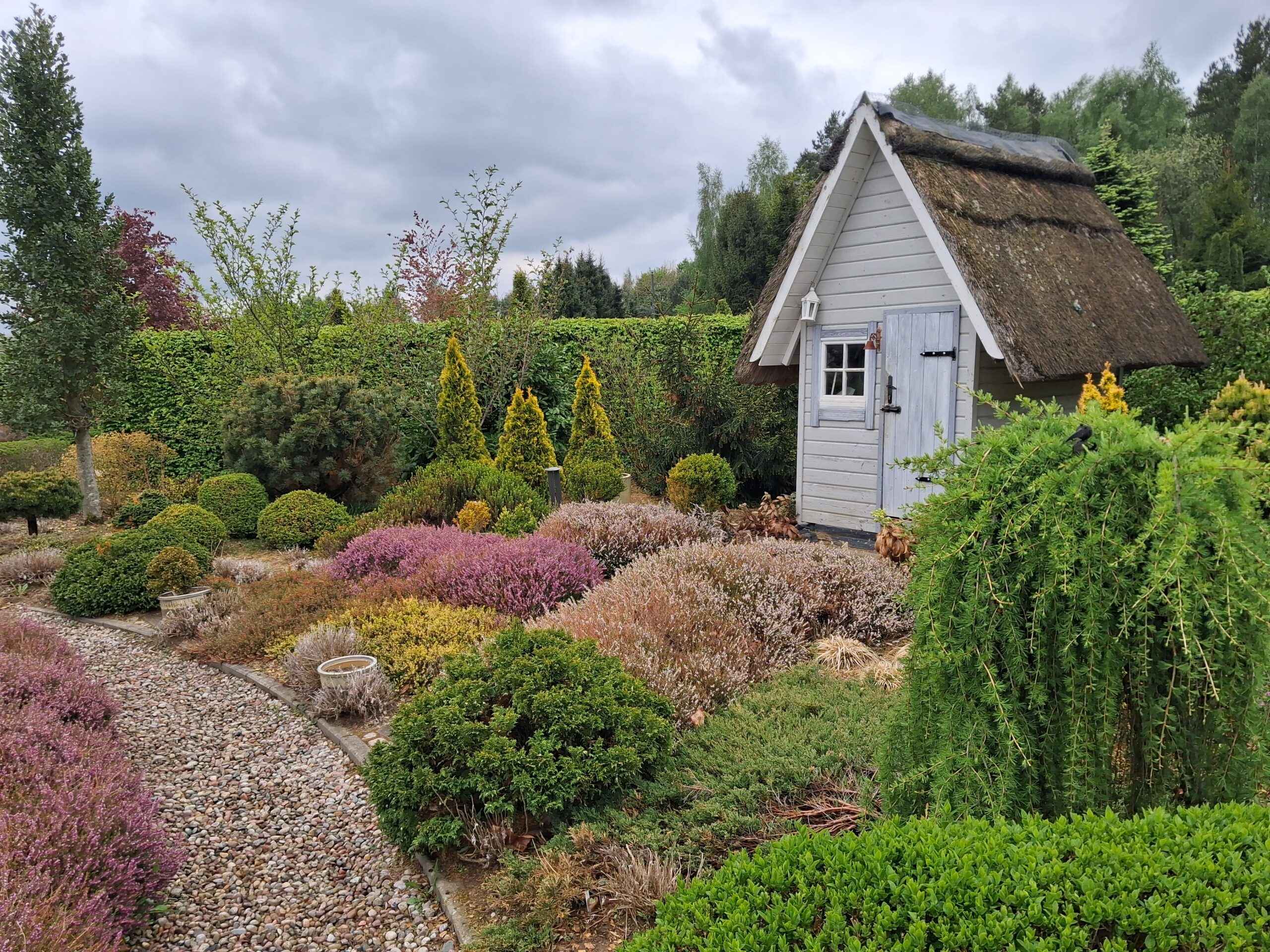
- A Modernist Grass Garden and plenty of quiet corners with benches or loungers to relax.
The educational boards also featured a cool fact about the types of mazes around the world – from ancient Roman mosaics and cathedral labyrinth floors (like in Chartres) to modern water or laser ones. Interestingly, depending on the country, different plants are used to build living mazes: hornbeam and beech in Poland, sunflowers in France, pineapples in Hawaii, and… cacti in South Africa.
A Private Project Without Funding
On our way out, we chatted with the staff for a bit. They were waiting for us because we were the last visitors of the day (and looking at the empty parking lot, quite possibly the only ones).
It’s worth noting that this entire place is 100% privately owned. The owners build and maintain these gardens purely out of passion and don’t receive any subsidies from the city or the state. The entire operation is funded solely by ticket sales. Considering the maintenance costs, logistics, and the sheer amount of work required to trim so many kilometers of hedges – hats off to them.
If you ever find yourself near Koszalin or Kołobrzeg, it’s well worth taking a detour here and supporting the place by buying a ticket. We will definitely be back in the summer to see these gardens in full bloom.
https://hortulus-spectabilis.com.pl
https://pl.wikipedia.org/wiki/Ogrody_Hortulus_Spectabilis

Hortulus Spectabilis – FAQ
Where is the hornbeam maze in Dobrzyca?
In the Hortulus Spectabilis Gardens in Dobrzyca, about 8.5 km as the crow flies from the sea, near Koszalin and Kołobrzeg. Note: about 2 km away are the older Hortulus Theme Gardens – a separate site with separate tickets (a combined ticket is available at the ticket office).
How big is the Hortulus Spectabilis maze?
The maze covers 1 hectare (101.5 × 100 m) and its hornbeam walls are 6,539 m long in total. Three routes lead to the central square with the tower: 396 m, 924 m and 1,003 m.
How tall is the viewing tower?
The metal double-helix tower is 20 m tall – from the top you can see the whole geometry of the maze and the box parterres.
How much time should you plan for the visit?
A whole day. Over 7.5 ha of gardens are open to visitors – our older kids spent the entire day in the maze alone and never got to see the rest.
Is Hortulus Spectabilis good for kids?
Yes. At the ticket office you can add a treasure-hunt game (14 PLN for us) – kids look for punches hidden in the maze and punch their cards. For the youngest there is a small playground at the end.
How not to get lost in the maze?
Use the “right hand on the wall” rule – it will get you to the centre, but by the longest route (about 1 km).